


Laser hair treatment starts with a realistic plan
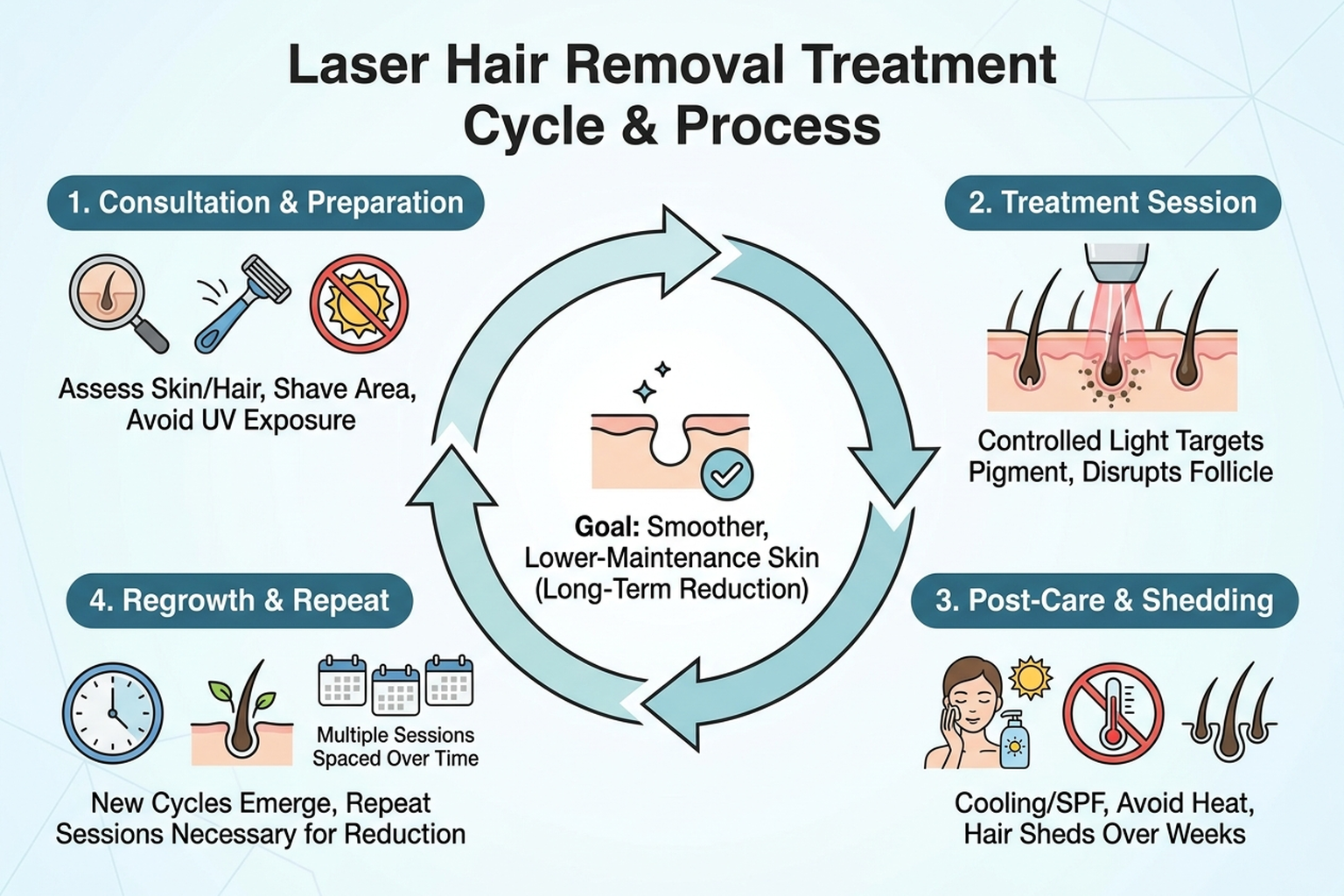
Laser hair removal uses controlled light energy to target pigment in the hair follicle, helping reduce future growth over a series of treatments. It is most useful for people who are tired of frequent shaving, waxing, ingrown hairs, or managing hair growth in areas such as the underarms, legs, bikini line, face, chest, or back.
Hair grows in cycles, so only follicles in an active growth stage respond during a given visit. That is why treatment is spaced over time rather than completed in one appointment. A careful consultation should cover your skin tone, hair colour and texture, medical history, recent sun exposure, and the areas you want treated before any treatment begins.
For a closer look at treatment areas and preparation, visit Laser Hair Removal. The goal is not to rush into a package; it is to establish whether laser treatment suits your hair and skin safely.
How laser hair removal works beneath the skin
During laser hair removal, the device directs light toward melanin, the pigment that gives hair its colour. The follicle absorbs that energy, which disrupts its ability to produce a new hair strand. The surrounding skin must be protected through appropriate settings, cooling, and an assessment by a trained provider.
Laser treatment tends to respond best when there is visible contrast between the hair and skin, but modern systems can be used across a broader range of skin tones than earlier laser devices. Hair that is white, grey, very blonde, or very fine may not respond as strongly because it contains less pigment for the laser to target.
A reputable clinic will explain that “permanent” refers to long-term hair reduction, not a promise that every follicle disappears forever. Hormonal changes, genetics, and certain health conditions can influence regrowth. Maintenance touch-ups may be appropriate for some clients. For a dedicated consultation for male grooming goals, see Laser Hair Removal for Men.
What to check before choosing a laser hair clinic
The device matters, but so does the person operating it and the assessment completed before treatment. A clinic should be willing to discuss suitability honestly, including situations where postponing treatment is safer, such as after recent tanning or while using medications that increase photosensitivity.
Royal Laser and Skincare Clinic uses the Soprano Ice system, an FDA-approved platform with cooling designed to make treatment more comfortable while supporting laser hair removal for all skin tones. A treatment plan should be adjusted to the client rather than assigned through a fixed session count.
- Ask about skin-tone assessment: Appropriate settings help reduce avoidable irritation and pigment changes, particularly for deeper skin tones.
- Ask how comfort is managed: Cooling technology and gradual energy delivery can affect how treatment feels from one area to another.
- Ask how progress is reviewed: Hair reduction should be assessed over treatment cycles, with changes made when your response calls for them.
- Ask about follow-up care: Clear aftercare guidance should cover sun protection, heat exposure, exercise, and skin products after a session.
What happens at a first laser hair appointment?
A first appointment usually begins with a consultation. Your aesthetician reviews the treatment area, checks your skin and hair characteristics, asks about medications and health factors, and explains what kind of reduction may be realistic. You should also have time to raise concerns about sensitivity, privacy, or previous reactions to hair-removal treatments.
Before the session, the area is typically shaved so the laser energy can focus below the skin rather than singeing surface hair. The provider may perform a test area when appropriate. Protective eyewear is worn throughout treatment, and the handpiece is moved across the skin in a controlled pattern.
Most clients describe sensations ranging from warmth to a quick snapping feeling, depending on the area and the individual. Claims of pain-free laser hair removal should be understood as a comfort goal, not a universal experience. Cooling can make a meaningful difference, but sensation varies.
Afterward, mild redness or warmth can occur temporarily. Avoid picking, exfoliating aggressively, hot baths, saunas, and direct sun exposure until the skin settles. If you have a history of cold sores, pigment concerns, or a skin condition, mention it before treatment so your provider can advise appropriately.
Laser hair removal versus shaving and waxing
The right hair-removal route depends on your tolerance for maintenance, your skin’s response, and how long you want the result to last. Shaving and waxing remove visible hair, while laser hair removal targets follicles over repeated visits.
| Approach | How it handles hair | Practical trade-off |
|---|---|---|
| Shaving | Cuts hair at the skin surface. | Fast and accessible, but regrowth can appear quickly and frequent shaving may irritate sensitive areas. |
| Waxing | Pulls hair from the root. | Leaves skin smooth for longer than shaving, but can be uncomfortable and requires enough visible regrowth before the next visit. |
| Laser hair removal | Uses light energy to reduce follicle activity over multiple hair-growth cycles. | Requires consistency and proper screening, but can reduce the ongoing time spent removing hair. |
Someone managing razor bumps along the bikini line may value reduced shaving frequency. A person who waxes before holidays may prefer the temporary smoothness of waxing. Neither choice is wrong; the practical question is how much recurring upkeep you want to take on.
Can every skin tone receive laser hair removal?
Laser hair removal can be performed on a broad range of skin tones, but safety depends on matching the laser system and treatment settings to the individual. Darker skin contains more melanin, so incorrect settings can raise the risk of excess heat being absorbed by the skin instead of the hair follicle.
Soprano Ice laser hair removal uses cooling and adjustable settings that allow trained aestheticians to treat diverse skin tones with care. The consultation remains essential: skin tone alone does not determine suitability, and hair colour, hair density, recent tanning, hormonal influences, and medical history all affect the treatment plan.
Do not treat recent tan lines, sunburned skin, or irritated skin as routine. Pausing treatment until the skin returns to its baseline condition can be the safer choice. Honest screening protects both your comfort and the quality of your result.
Choosing a clinic for laser hair removal
Focus on how the clinic evaluates and supports you, not just on a headline promise. A dependable provider should explain the device being used, identify limitations early, and provide clear preparation and aftercare instructions.
Royal Laser and Skincare Clinic has provided laser services since 2010 through certified aestheticians. The clinic’s client-first model centres on treatment plans based on the individual rather than requiring a predetermined series of six to twelve sessions.
Questions worth asking during a consultation include:
- Who will perform the treatment? Ask about the provider’s training, practical experience, and how they assess your skin before beginning.
- Which laser platform will be used? The clinic should name the system and explain how its cooling and settings relate to your skin and hair.
- How are treatment goals documented? Clear baseline photos or progress discussions make it easier to assess reduction over time.
- What happens if regrowth appears later? Ask how touch-ups are handled and whether the clinic’s results guarantee includes ongoing support.
Full-body and Brazilian treatment planning
Full body laser hair removal can include several areas, but each area should still be assessed independently. Underarms may respond differently than facial hair, while legs and bikini areas can have different hair density, sensitivity, and treatment timing.
For Brazilian laser hair removal, privacy, hygiene, and clear communication should be part of the appointment. Your provider should explain exactly which areas are included, how to prepare, and how to care for the skin afterward. Clients dealing with ingrown hairs often ask about this area because shaving and waxing can repeatedly irritate the same follicles.
Men may seek laser treatment for the back, shoulders, chest, abdomen, neck, beard line, or intimate areas. Dense hair can require a different timing strategy than finer hair. A consultation helps establish a comfortable schedule without assuming every body area will progress at the same pace.
Practical steps before each session
Step 1: Share your health and medication history
Tell your provider about prescriptions, topical products, pregnancy, skin conditions, and past reactions to light-based treatments. Certain medications and active skincare ingredients can change how your skin reacts to laser energy.
Step 2: Avoid tanning before treatment
Sun exposure, tanning beds, and self-tanner can interfere with a reliable skin assessment. Your aesthetician may need to postpone treatment if your skin tone has recently changed.
Step 3: Shave the treatment area as directed
Shaving shortly before the appointment leaves the follicle in place while reducing surface hair. Avoid waxing, tweezing, or threading in the period your clinic advises, because those actions remove the target hair from the root.
Step 4: Arrive with clean skin
Remove deodorant, makeup, perfume, heavy lotion, and active skincare products from the treatment area unless your provider instructs otherwise. Clean skin allows the handpiece to make proper contact.
Step 5: Follow aftercare even if the area feels normal
Use gentle skincare, protect the area from sun exposure, and avoid excessive heat until any warmth or redness has settled. Contact the clinic if a reaction feels unusual or persists.
A results guarantee should be explained clearly
Hair reduction is a process, and responsible clinics should be clear about what they guarantee. At Royal Laser and Skincare Clinic, the focus is on results rather than selling a fixed number of sessions. The clinic also includes lifetime free touch-ups under its stated treatment approach.
A promise should still be paired with transparent expectations. Hormonal hair growth, especially with PCOS or hirsutism, may require ongoing monitoring because the body can activate new follicles over time. The useful question is not whether every client follows an identical timeline; it is whether the clinic has a clear plan for reviewing your response and supporting the agreed outcome.
Clients who are also focused on skin texture or hydration can view Facial Treatments separately from hair-removal planning. Skin-focused services and laser hair removal should each be assessed for their own goals and timing.
FAQs About Laser Hair Removal
The number of sessions depends on the area, hair density, hair-growth cycle, hormones, and response to treatment. A consultation should provide a personal estimate, then progress should be reviewed as treatment continues rather than assumed from a standard package.
Shaving is commonly permitted between visits because it leaves the follicle intact under the skin. Waxing, tweezing, and threading may interfere with treatment because they remove hair from the root. Follow the preparation instructions provided for your treatment area.
Laser hair removal can reduce unwanted hair associated with PCOS, although hormonal changes can activate new hair growth over time. A realistic plan may include periodic touch-ups. Share any hormonal diagnosis during consultation so expectations and treatment timing can be discussed clearly.
Many clients choose laser hair removal for bikini-area hair because shaving and waxing can contribute to irritation or ingrown hairs. Suitability depends on your skin condition, hair characteristics, and medical history. A clean, professional setting and clear aftercare guidance are especially important for intimate areas.
Retinol and other active skincare products can make skin more reactive for some people. Tell your provider what you use, including prescription products, so they can give area-specific instructions. Do not stop prescribed medication without direction from the clinician who prescribed it.
Talk through your laser hair goals with confidence
Royal Laser and Skincare Clinic offers complimentary consultations and includes the first session to help assess fit. Certified aestheticians use the Soprano Ice system, provide individualized treatment planning, and explain the clinic’s results guarantee and lifetime touch-up policy before you commit. You can also review Laser Hair Removal Prices before discussing your preferred treatment areas.
Ready for a clear treatment plan?
Discuss your skin, hair, comfort concerns, and desired areas with a certified aesthetician before treatment begins.