


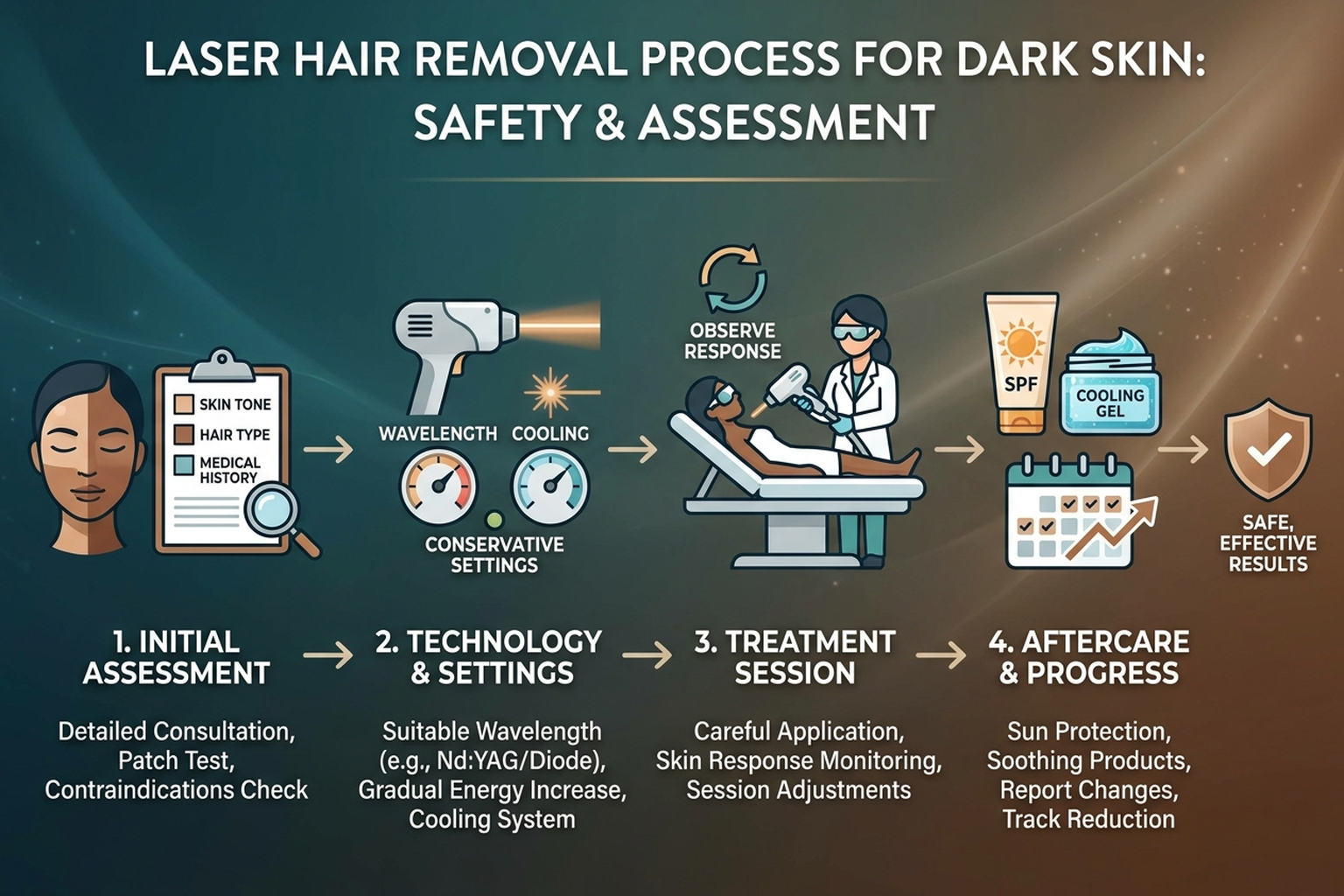
Safe treatment starts with the right wavelength and assessment
Laser hair removal for dark skin can be performed safely when the device, settings, and treatment plan are selected for the skin’s melanin level and the hair being treated. The central concern is preventing excess heat from being absorbed by surrounding skin rather than by the hair follicle. A qualified provider assesses skin tone, recent sun exposure, hair density, medical history, and the treatment area before beginning.
Older laser systems were more likely to create problems for deeper skin tones because they could not distinguish as precisely between pigment in the skin and pigment in the hair. Modern systems designed for a broader range of skin tones have improved this process, but safe care still depends on conservative settings, careful observation, and adjustments between visits.
At Royal Laser and Skincare Clinic, consultations are used to determine whether treatment is appropriate before a full plan is recommended. You can review the clinic’s Laser Hair Removal service details before your appointment.
Why darker skin needs a more careful laser plan
Melanin is the pigment that gives skin and hair their colour. Laser hair removal works by directing light energy toward melanin in the hair follicle, where the heat helps disrupt future hair growth. Darker skin contains more melanin near the surface, so a poorly selected laser or overly aggressive setting can heat the skin as well as the follicle.
The safest treatment plan separates hair-targeting energy from skin-targeting energy as much as possible. That usually means using an appropriate wavelength, beginning with a patch test when indicated, using gradual energy increases, and allowing enough time for the skin to respond between sessions. A brief treatment is not the goal; controlled treatment is.
Hair colour also affects results. Dark, coarse hair usually responds most readily because it contains more pigment. Blonde, red, grey, and very fine hair may respond less predictably, regardless of skin tone. A consultation should address that limitation honestly before treatment begins.
Quick facts about laser hair removal for dark skin
The essentials, stated plainly.
- Safety: Appropriate technology and cautious settings reduce the chance of excess heat affecting pigmented skin.
- Comfort: Cooling during treatment can make the sensation more manageable while helping protect the skin surface.
- Results: Hair grows in cycles, so repeated sessions are needed to treat follicles during an active growth phase.
- Preparation: Avoid tanning, waxing, plucking, and irritating skin products before treatment unless your provider gives different instructions.
- Assessment: A consultation should cover skin tone, hair characteristics, medications, hormonal factors, and treatment goals.
Technology is only one part of safe laser hair removal for dark skin
A suitable laser platform is essential, but the person operating it and the protocol used are equally significant. The Soprano Ice system used by Royal Laser and Skincare Clinic is FDA-approved and designed for treatment across skin tones. Its cooling technology is intended to improve comfort while energy is delivered gradually to the treatment area.
During a well-managed appointment, the provider checks how the skin responded to the previous session, confirms that there has been no recent tanning or irritation, and adjusts settings based on observed response. Skin can change with sun exposure, hormonal shifts, active skincare products, and medication changes, so settings should not be copied automatically from one visit to the next.
For clients treating larger areas, such as legs, back, chest, or full body hair, consistent technique becomes particularly important. The same is true for Laser Hair Removal for Men, where dense hair and broad treatment areas may require a carefully paced plan.
Signs a clinic is prepared to treat deeper skin tones
A reputable clinic should welcome detailed questions about skin safety instead of offering a vague reassurance. Before committing, ask which laser platform will be used, how the provider determines starting settings, whether a patch test is suitable for your skin, and how the clinic responds if you experience prolonged redness or pigment changes.
- A skin and hair assessment comes first: The provider should ask about your natural skin tone, current sun exposure, hair colour, hair thickness, and any history of hyperpigmentation or keloid scarring.
- The consultation includes health questions: Certain medications, active skin conditions, pregnancy, recent chemical peels, and photosensitizing products can affect whether treatment should be postponed.
- The plan includes realistic timing: Sessions are spaced to work with the hair-growth cycle rather than arranged too closely together for convenience.
- Aftercare instructions are specific: You should leave knowing how to calm temporary warmth, which products to pause, and when to contact the clinic.
A provider should also be clear about the distinction between permanent hair reduction and a promise that every follicle will disappear forever. Most clients see a significant, lasting reduction in treated hair, though occasional maintenance can be needed.
What your first appointment should include
The first session should not feel rushed. Your provider should confirm that the area is clean and freshly shaved, review contraindications, and examine the skin before treatment. If you have had strong sun exposure, a new tan, a rash, or any open skin in the treatment area, postponing is often the safer choice.
During treatment, many people describe the sensation as a brief warmth or mild snapping feeling. Cooling technology can reduce discomfort, but individual sensitivity varies by body area. Underarms and lower legs may feel different from the bikini area or upper lip because nerve density and hair thickness differ.
After treatment, temporary redness around follicles or mild warmth can occur. Avoid hot baths, saunas, intense exercise, fragranced products, and direct sun exposure for the period advised by your provider. Do not wax or pluck between sessions; shaving is usually preferred because it leaves the follicle available for the next treatment.
Laser hair removal compared with shaving and waxing
Shaving, waxing, and laser treatment each address unwanted hair differently. The right choice depends on your tolerance for upkeep, your skin’s reaction to hair removal, and whether long-term reduction is your priority.
| Approach | How it affects hair | Common consideration for dark skin |
|---|---|---|
| Shaving | Removes hair at the skin surface and requires regular upkeep. | Can contribute to razor bumps, ingrown hairs, and dark marks when skin is repeatedly irritated. |
| Waxing | Pulls hair from the root, but hair regrows and repeated appointments are needed. | May cause inflammation, ingrown hairs, or post-inflammatory hyperpigmentation in sensitive areas. |
| Laser treatment | Targets the hair follicle over a series of sessions to reduce future growth. | Requires appropriate technology and settings to protect melanin-rich skin. |
For people prone to ingrown hairs after shaving or waxing, laser treatment may reduce the repeated irritation cycle once hair growth becomes lighter and less frequent. It is still not suitable for every person or every hair type, which is why an individual assessment remains useful.
Preparation and aftercare that protect your skin
Step 1: Share your complete skin history
Tell your provider about past pigment changes, eczema, psoriasis, cold sores, scarring tendencies, and previous laser treatments. This information helps identify areas that may need a lower starting setting or a delayed appointment.
Practical result: Your treatment settings can be selected using information beyond skin tone alone.
Step 2: Keep the treatment area out of strong sun
Sun exposure can increase melanin activity and make skin more reactive. Avoid tanning before sessions and use sun protection as advised, especially for exposed areas such as the face, arms, and legs.
Practical result: Skin that is closer to its natural baseline is easier to assess and treat safely.
Step 3: Shave instead of removing hair from the root
Waxing, threading, and plucking remove the part of the hair needed for laser targeting. Shaving shortly before treatment usually keeps the follicle available while reducing surface hair that could hold excess heat.
Practical result: The laser energy can focus more effectively beneath the skin surface.
Step 4: Pause irritating products when directed
Retinoids, exfoliating acids, benzoyl peroxide, and some prescription products can make skin more sensitive. Follow the clinic’s instructions about pausing these products around the treatment date rather than making assumptions based on a previous skincare routine.
Practical result: Redness and avoidable sensitivity are less likely to complicate recovery.
Step 5: Report changes between sessions
Tell the provider about new medications, sun exposure, pregnancy, active breakouts, skin irritation, or any unusual reaction after a prior visit. Small updates can change whether treatment should continue that day.
Practical result: Your treatment plan can respond to current skin conditions rather than outdated information.
Questions to ask before choosing a laser clinic
The quality of a consultation often tells you more than a promotional claim. A clinic that treats darker skin responsibly should explain the reason behind its recommendations and give you time to raise concerns.
- Which device will be used on my skin? Ask for the system name and an explanation of how it is used for deeper skin tones.
- Who performs the treatment? Confirm that the person assessing and treating your skin has relevant laser training and practical experience.
- How will you determine my starting setting? A clear answer should refer to skin tone, hair features, the body area, and your skin’s response.
- What happens if my skin reacts? Ask how to reach the clinic and what signs require a prompt follow-up.
- How is progress assessed? Hair shedding and slower regrowth are more useful signs than judging results immediately after one session.
Choosing care that respects your long-term skin health
Laser hair removal for dark skin should feel considered, not experimental. The safest route combines suitable technology, a trained aesthetician, realistic expectations, and aftercare that protects the skin barrier. At Royal Laser and Skincare Clinic, certified aestheticians have provided laser treatments since 2010, using the Soprano Ice system for clients across skin tones and hair types.
The clinic’s treatment philosophy focuses on outcomes rather than requiring a fixed number of sessions. Clients receive a complimentary consultation, clear guidance about treatment suitability, and a plan based on the area, hair growth pattern, and desired reduction. Royal Laser and Skincare Clinic also includes lifetime free touch-ups under its results-guarantee policy once the agreed treatment outcome is reached.
For a personal assessment, treatment questions, or a review of Laser Hair Removal Prices, you can speak with the clinic at 905-237-3242 or info@royallaserclinic.com.
Ready for a skin-focused assessment?
Discuss your skin tone, hair concerns, treatment areas, and suitability with a certified aesthetician before committing to treatment.
FAQs About Laser Hair Removal for Dark Skin
Dark spots, light spots, or burns are possible when unsuitable technology or excessive settings are used. Risk is reduced through a detailed assessment, careful parameter selection, sun avoidance, and monitoring the skin’s response between sessions. Any lasting colour change should be assessed by a qualified medical professional.
Dark, coarse hair usually responds most effectively because the laser can detect more pigment in the follicle. Very light blonde, red, grey, white, or very fine hair may not absorb enough energy for predictable reduction. A consultation can clarify whether your hair is a suitable candidate.
The number of sessions varies by body area, hair density, hair-growth cycle, hormonal influences, and treatment response. Hair must be treated during active growth, so sessions are spaced apart. A provider should give a realistic plan after seeing the treatment area rather than making a blanket promise.
Shaving is usually permitted and is commonly preferred between sessions because it removes visible hair without pulling the follicle out. Avoid waxing, threading, plucking, or epilating unless your provider directs otherwise, since those practices can reduce the laser’s target for the next appointment.
Treatment may need to be delayed if you have a recent tan, active skin irritation, open skin, a current infection, or are using certain medications or skincare products that increase sensitivity. Share any medical or medication changes during your consultation so the provider can assess whether treatment is appropriate.