


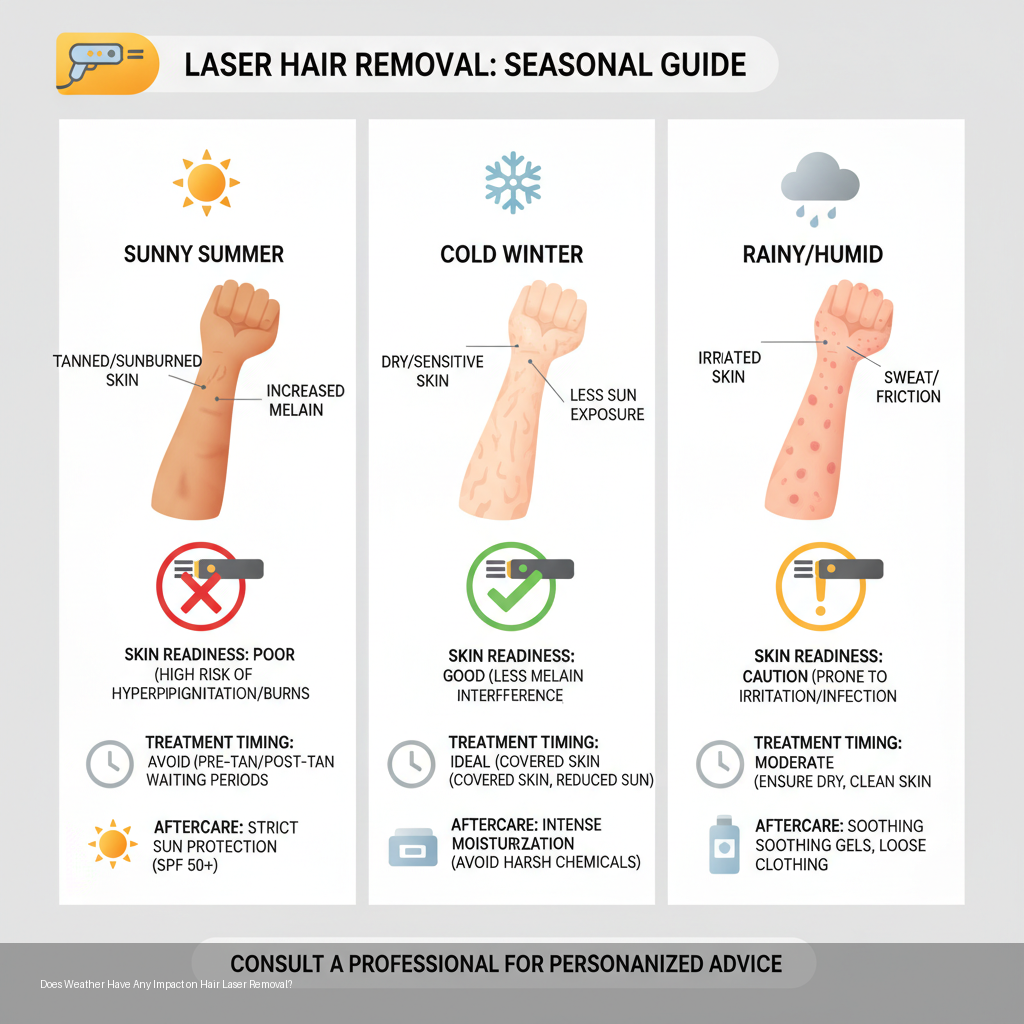
Does weather have any impact on hair laser removal? Yes, but not because rain, cold, or heat changes the laser itself. Weather mainly affects your skin before and after treatment: sun exposure, tanning, sweating, dryness, and irritation can all change how ready your skin is for a session and how comfortably it heals afterward.
Laser hair removal targets pigment in the hair follicle beneath the skin. A well-planned treatment can be performed in any season, but your skin condition on the day of treatment counts more than the forecast. If your skin is sunburned, freshly tanned, overheated, very dry, or irritated, your aesthetician may adjust timing or settings to keep the treatment safer and more comfortable.
Royal Laser and Skincare Clinic uses the Soprano Ice system for Laser Hair Removal, with cooling technology designed to support pain-free laser hair removal for different skin tones and treatment areas. The key is planning around weather-related skin changes, not waiting for a “perfect” season.
Quick Facts: Weather and Laser Hair Removal
A quick, practical snapshot before comparing seasons.
- What: Weather affects skin readiness, aftercare comfort, and sun exposure risk more than laser performance.
- Who: Clients with recent tanning, sunburn, sensitive skin, or dry winter skin need extra timing care.
- When: Treatments can be done year-round when skin is healthy, untanned, and properly prepared.
- How: Good planning includes sun protection, shaving before treatment, moisturizing dry skin, and avoiding heat after sessions.
- Why: Better skin condition can reduce irritation risk and help each session stay consistent.
Does weather have any impact on hair laser removal? The practical answer
Weather does not stop laser hair removal from working. The laser still targets hair follicles the same way in winter, summer, rainy weather, or dry indoor air. The real difference is how weather changes the skin surface and the habits around it.
Heat can lead to sweat, friction, sun exposure, and tanning. Cold weather can make skin drier, tighter, and more reactive. Humid weather may increase post-treatment discomfort if clothing rubs against treated areas. None of these automatically prevents treatment, but each can affect the plan for timing, preparation, and aftercare.
The safest approach is to treat the skin as the deciding factor. If the treatment area is calm, shaved, free from fresh tan, and not irritated, weather is usually manageable. If the treatment area is burned, peeling, inflamed, or recently exposed to strong sun, waiting can be the safer decision.
For clients comparing waxing, shaving, and laser, weather also changes convenience. Shaving may feel simple but needs constant upkeep. Waxing can irritate skin during hot or sweaty periods. Laser hair removal requires more planning, yet it supports long-term hair reduction and can reduce the cycle of regrowth management over time.
Summer vs. winter vs. rainy weather for laser hair removal
Seasonal timing is not about finding one perfect month. It is about knowing which weather-related risks are easier to control for your routine, treatment area, and skin habits. The comparison below shows where each season tends to help or complicate laser hair removal.
Warm and sunny weather
A) Main advantage: Warm weather can be convenient for clients who want smoother skin during shorts, swimwear, or lighter clothing seasons.
- How it works: Sessions can continue in warm weather if the treatment area is not sunburned or freshly tanned.
- Good fit: Clients who can use sun protection consistently and avoid direct sun on treated skin are usually better suited to summer sessions.
- Example: A client treating underarms may find summer easier to manage than legs because underarms are less exposed to direct sun.
B) Main caution: Sun exposure is the biggest warm-weather concern because recently tanned or burned skin may be more reactive during treatment.
- How it works: Laser settings are chosen based on skin and hair characteristics, so a fresh tan can affect treatment planning.
- Good fit: Clients who avoid tanning beds, intentional tanning, and uncovered peak sun exposure are usually easier to treat consistently.
- Example: A client returning from a beach trip may need to wait until the skin has fully calmed before treating exposed areas.
C) Aftercare issue: Heat and sweat can make treated skin feel more sensitive for a short period after the session.
- How it works: Saunas, hot showers, heavy workouts, and tight clothing can increase warmth and friction on treated skin.
- Good fit: Clients who can keep the area cool and clean after treatment usually handle warm-weather appointments well.
- Example: A client treating the bikini area may choose loose clothing after a session to reduce friction during hot weather.
Cold and dry weather
A) Main advantage: Cold weather often means less direct sun exposure on many treatment areas, which can make timing easier.
- How it works: Covered skin is less likely to be tanned, so treatment planning may be more predictable.
- Good fit: Clients treating legs, arms, full body areas, or the bikini area often appreciate starting during cooler months.
- Example: A client beginning full body laser hair removal may find winter clothing makes sun avoidance simpler.
B) Main caution: Indoor heating and cold air can dry the skin, and very dry skin may feel more sensitive during treatment.
- How it works: Dryness can weaken the skin barrier, especially if the area is itchy, cracked, or flaky.
- Good fit: Clients who moisturize regularly, while avoiding heavy products right before treatment, usually prepare better.
- Example: A client treating lower legs may need a few days of gentle moisturizing before the appointment if the skin feels tight.
C) Aftercare issue: Thick clothing can rub against treated areas, especially around thighs, underarms, chest, back, or bikini line.
- How it works: Friction may create redness or a prickly sensation after treatment, even when the session itself went well.
- Good fit: Clients who wear soft, breathable fabrics after treatment tend to be more comfortable.
- Example: A client treating the back may choose a loose cotton shirt after the appointment instead of a tight thermal layer.
Rainy, humid, or stormy weather
A) Main advantage: Rainy weather can reduce sun exposure, which may help clients avoid tanning between sessions.
- How it works: Less sun exposure can keep skin tone more stable for treatment planning.
- Good fit: Clients treating exposed areas may find cloudy periods easier for sun avoidance.
- Example: A client treating arms may prefer cloudy weeks because fewer direct sun precautions are needed outdoors.
B) Main caution: Humidity and wet clothing can create friction, especially after treating areas where skin touches skin.
- How it works: Damp fabric can rub the treatment area and increase irritation for a short time.
- Good fit: Clients who can change into dry, loose clothing after travel are better prepared.
- Example: A client treating inner thighs may bring dry clothing if rain is expected after the appointment.
C) Scheduling issue: Severe weather can affect appointment timing, travel, and aftercare routines.
- How it works: Rushing, overheating in heavy layers, or sitting in damp clothes can make skin feel more reactive after treatment.
- Good fit: Clients who leave extra time and bring comfortable clothing can keep the session low-stress.
- Example: A client coming in after a rainy commute may want the skin fully dry before treatment begins.
How weather changes skin before and after treatment
Laser hair removal works beneath the skin surface, but the skin surface still needs to be in suitable condition. A treatment area that is irritated, inflamed, or recently sunburned may not tolerate laser energy as comfortably as calm skin.
Warm weather raises the chance of tanning and sweating. Tanning increases pigment in the skin, while sweating after treatment can irritate follicles and create a warm, prickly feeling. A careful plan may include avoiding direct sun, skipping heavy workouts after the session, and keeping the treated area cool.
Cold weather creates a different concern: dryness. Dry skin can feel tight and more reactive, especially on legs, arms, and the face. Gentle moisturizing in the days before treatment can support the skin barrier, but heavy creams, oils, deodorants, or lotions should not be left on the treatment area at the appointment.
Weather also affects clothing. Tight jeans after leg treatment, compression gym wear after bikini treatment, or a heavy sweater after chest or back treatment can all add friction. A small clothing change can make recovery noticeably more comfortable.
Laser hair removal vs. waxing and shaving in different weather
Weather affects every hair removal routine, not only laser. The difference is that shaving and waxing manage visible hair at the surface or from the root, while laser hair removal targets follicles for long-term reduction over a series of sessions.
| Hair removal choice | Weather-related concern | Practical comparison |
|---|---|---|
| Shaving | Heat, sweat, and friction can worsen razor bumps or irritation. | Shaving is quick, but regrowth appears fast and frequent shaving can bother sensitive skin. |
| Waxing | Sun exposure and heat after waxing may irritate freshly treated skin. | Waxing removes hair from the root, but clients must grow hair out before appointments. |
| Laser hair removal | Fresh tan, sunburn, dryness, or post-treatment heat can affect timing and comfort. | Laser requires a planned series of sessions, but it can reduce long-term dependence on shaving and waxing. |
For clients considering Brazilian laser hair removal, underarms, legs, chest, back, or full body areas, weather planning is part of getting a cleaner experience. Treatment is not only about the device; it is also about how the skin is prepared, treated, and protected after the appointment.
How Soprano Ice supports year-round laser appointments
Soprano Ice laser hair removal uses built-in cooling to help protect the skin surface and improve comfort during treatment. The cooling feature is especially helpful for clients who worry about heat sensation, sensitivity, or discomfort during laser appointments.
The system is used for laser hair removal all skin tones, with settings selected based on a consultation and skin assessment. That assessment still counts. Even with advanced technology, recently tanned, burned, peeling, or irritated skin should be reviewed before treatment proceeds.
Royal Laser and Skincare Clinic focuses on permanent laser hair removal with treatment planning that accounts for skin tone, hair type, treatment area, and lifestyle. Men considering Laser Hair Removal for Men may have different planning needs for dense hair areas such as the back, chest, shoulders, beard line, or neck, especially during sweaty or dry seasons.
For clients pairing laser with skin maintenance, Facial Treatments may also be discussed during a consultation. Facial skin can react more visibly to sun, wind, and dryness, so timing between services should be coordinated carefully.
Weather-based prep before your session
The right preparation helps keep laser sessions consistent across seasons. These steps are simple, but they directly affect comfort, skin response, and whether the treatment area is ready on appointment day.
Step 1: Keep treated skin out of strong sun
Avoid intentional tanning and protect the treatment area before your appointment. This helps keep skin tone stable so your provider can assess the area accurately.
Weather cue: Sunny weather needs stricter coverage and sunscreen habits for exposed areas.
Skin cue: If the skin is red, peeling, or tender, the session may need to be moved.
Example: A client treating legs should avoid arriving with a recent tan line or sunburn from outdoor activity.
Step 2: Shave, but do not wax before laser
Shaving leaves the follicle target intact while removing surface hair. Waxing, threading, or plucking removes the hair from the root, which can reduce the laser’s target.
Weather cue: In hot weather, shave gently to avoid razor irritation before the session.
Skin cue: Small cuts, razor burn, or inflamed bumps should be mentioned before treatment begins.
Example: A client treating underarms should shave as instructed, then arrive with clean skin and no deodorant residue.
Step 3: Hydrate dry skin before cold-weather sessions
Dry winter skin can feel more reactive under any cosmetic treatment. Gentle moisturizing in the days before your appointment can help, as long as the skin is clean at treatment time.
Weather cue: Indoor heating can make legs, arms, and hands especially dry.
Skin cue: Cracked or itchy skin may need time to recover before treatment.
Example: A client treating lower legs may moisturize regularly during the week, then avoid lotion on the treatment area right before the visit.
Step 4: Plan clothing for the trip home
Loose, breathable clothing can reduce friction after treatment. This is useful in both hot and cold weather because sweat and thick fabrics can irritate treated skin.
Weather cue: Rainy or humid weather may call for dry backup clothing.
Skin cue: The treated area may feel warm or sensitive for a short period after the session.
Example: After bikini or inner thigh treatment, soft loose clothing is usually more comfortable than tight leggings.
Step 5: Avoid heat after treatment
Post-treatment skin needs a calmer environment for a short period. Hot showers, saunas, intense workouts, and heavy sweating can increase irritation right after a session.
Weather cue: Hot days may require extra cooling and lower-intensity activity after the appointment.
Skin cue: Mild redness can be normal, but strong discomfort should be reported to the clinic.
Example: A client treating the back may skip a high-sweat workout after the appointment and keep the area cool instead.
When weather should make you reschedule
Weather alone is rarely the reason to delay laser hair removal. Skin condition is the real reason. If a heat wave, beach day, ski trip, windburn, or dry-skin flare has left the treatment area irritated, the safer step may be to wait.
Consider rescheduling if the treatment area has:
- Fresh sunburn: Red, hot, painful, or peeling skin should not be treated until it has fully recovered.
- Recent tanning: A noticeable new tan can affect how the laser settings are chosen and may increase sensitivity.
- Open irritation: Cuts, scratches, rashes, or inflamed razor bumps should be assessed before treatment.
- Severe dryness: Cracked or itchy skin may need barrier repair before a session feels comfortable.
- Heat-related sensitivity: Heavy sweating, friction, or heat rash around the treatment area can make aftercare harder.
A consultation can prevent guessing. Royal Laser and Skincare Clinic offers complimentary consultations so clients can ask about timing, skin condition, hair type, and treatment planning before committing to a larger series.
How to compare clinics for weather-safe laser planning
Weather-safe planning is a sign of careful laser work. A clinic should not treat every appointment the same way regardless of the client’s skin condition that day. The provider should ask about recent sun exposure, tanning, medications that may affect sensitivity, skincare products, and any irritation around the treatment area.
Good clinic comparison should include practical details, not only the device name. Ask how the clinic handles recently tanned skin, whether cooling is used, how settings are selected, and what aftercare instructions are given for heat, sweat, dryness, and sun exposure.
Questions worth asking before you commit
- How do you assess skin before each session? A quick visual check can catch sunburn, irritation, dryness, or sensitivity concerns before treatment begins.
- What technology do you use? Soprano Ice supports comfortable treatment with cooling, which can be helpful for sensitive areas and year-round appointments.
- Do you treat different skin tones? Laser hair removal all skin tones requires proper assessment, settings, and experience.
- What happens if my skin is not ready? A careful clinic should prioritize safe timing over forcing a session.
- How are long-term results handled? Royal Laser and Skincare Clinic offers results-guaranteed plans with lifetime free touch-ups included under the clinic’s treatment model.
What to expect if you book during a tricky season
A weather-aware appointment starts before the laser is used. Your provider should review the treatment area, ask about recent sun or tanning exposure, confirm shaving, and check whether the skin has irritation, dryness, or product residue.
During treatment, the Soprano Ice system delivers laser energy while cooling the skin surface. Clients often choose this type of pain-free laser hair removal because comfort can be a deciding factor for sensitive areas such as Brazilian, underarms, face, chest, back, or bikini line.
After the session, you should receive aftercare guidance that fits the season. In warm weather, that may mean stronger reminders about sun protection, workouts, and sweat. In cold weather, that may mean protecting dry skin and avoiding friction from heavy clothing.
If you are comparing timing, treatment areas, and budget structure, the Laser Hair Removal Prices page can help you prepare questions for your consultation without guessing which areas to prioritize first.
FAQs About does weather have any impact on hair laser removal?
Yes, laser hair removal can be done in summer if the treatment area is not sunburned, freshly tanned, peeling, or irritated. The main summer concern is sun exposure. Clients should protect treated areas from direct sun and avoid heat, sweat, and friction right after sessions.
Winter can be easier for areas usually covered by clothing because there is often less direct sun exposure. The main winter concern is dry skin. If the treatment area is very dry, cracked, or itchy, your provider may recommend improving the skin barrier before treatment.
Rain does not affect the laser, but wet clothing and humidity can irritate treated skin after the session. Arriving with dry, clean skin and wearing loose clothing afterward can make the appointment more comfortable, especially for bikini, thighs, underarms, chest, or back areas.
You should tell the clinic before treating sunburned skin. Red, hot, tender, or peeling skin is usually not suitable for laser treatment until it has recovered. Treating compromised skin may increase discomfort and irritation, so a short delay can be the safer decision.
Cold weather itself does not make the laser stronger, but dry or tight skin can feel more sensitive. Gentle moisturizing before the appointment week can help, while the treatment area should still be clean and free of heavy creams or oils at the session.
Book with confidence when weather is a concern
Weather should not leave you guessing about laser hair removal timing. The better question is whether your skin is ready for treatment on the day of your appointment. Royal Laser and Skincare Clinic uses Soprano Ice technology, certified aestheticians, complimentary consultations, results-guaranteed treatment planning, and lifetime free touch-ups included under the clinic’s model.
If you are unsure whether sun exposure, dry skin, sweating, tanning, or a recent skin reaction affects your next session, a consultation can give you a clear answer before treatment begins. You can also speak with the clinic by phone at 905-237-3242 or email info@royallaserclinic.com.
Ready to plan your laser sessions around your skin?
Get a professional skin and hair assessment before choosing your timing, treatment area, and long-term plan.