


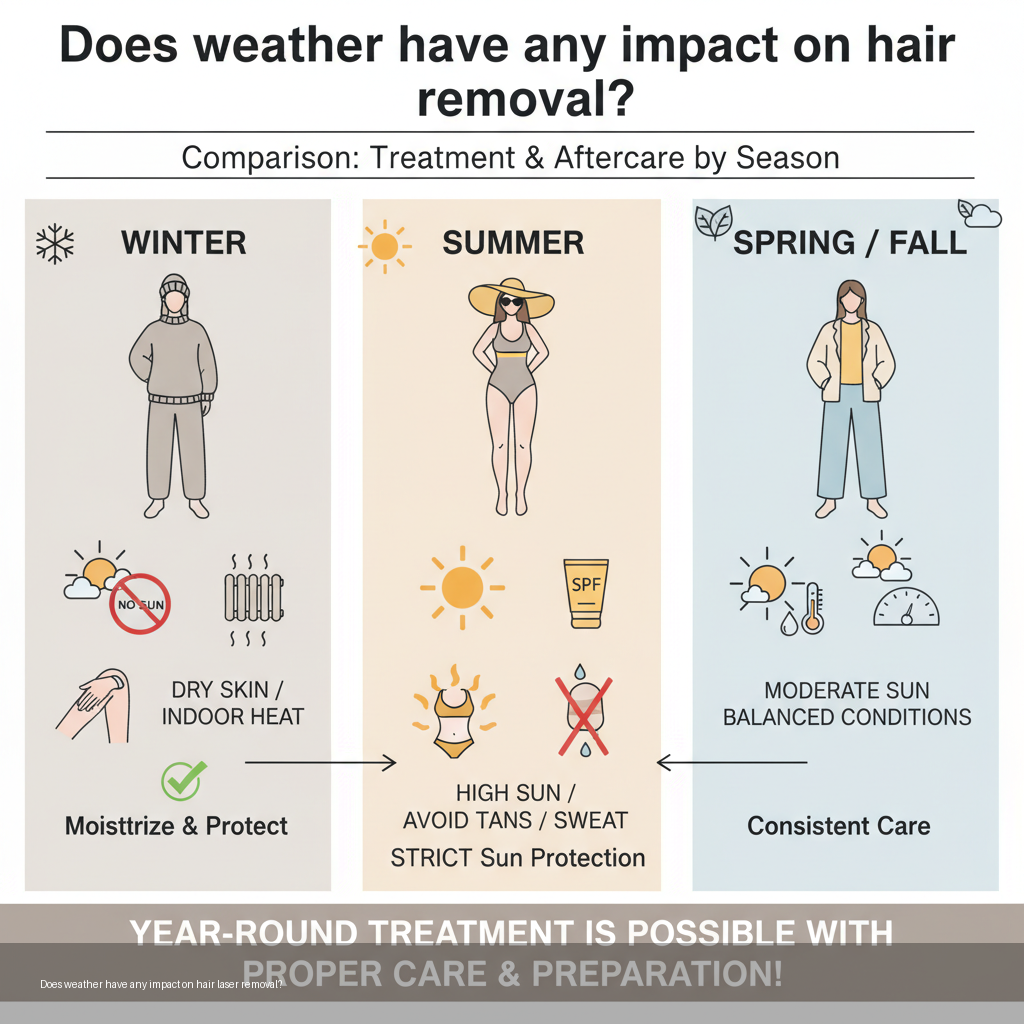
Does weather have any impact on hair laser removal? Yes, but mainly through your skin condition, sun exposure, sweating, and aftercare habits — not because the laser stops working in certain seasons. Laser hair removal targets pigment in the hair follicle beneath the skin, so the treatment can be performed year-round when your skin is properly prepared and not freshly tanned, burned, irritated, or overly dry.
The practical difference is comfort and convenience. Winter often makes sun avoidance easier. Summer can still work well, but it usually requires more discipline with sunscreen, shade, and avoiding heat after appointments. If you are comparing seasons before starting Laser Hair Removal, the right timing depends on your lifestyle, skin response, treatment area, and how closely you can follow pre- and post-care instructions.
Quick Facts: Weather and Laser Hair Removal
The short version is simple: weather affects planning more than results.
- What: Laser hair removal uses controlled light energy to heat active hair follicles while protecting the surrounding skin.
- Who: People with stable, healthy skin usually have the easiest appointments, regardless of the season.
- Where: Common areas include underarms, legs, face, arms, bikini, Brazilian, chest, back, and full body.
- How: Good timing involves avoiding tanning, managing dryness, limiting heat exposure, and keeping the skin clean before treatment.
- Why: Better skin preparation can reduce irritation, improve comfort, and help your provider treat safely at the right settings.
Does weather have any impact on hair laser removal timing?
Weather can influence how easy it is to stay treatment-ready. The laser needs a clear contrast between the hair follicle and the surrounding skin, and recent tanning can make that harder to assess safely. That is why a beach-heavy summer, a sunny vacation, or outdoor work without reliable skin protection can affect appointment timing.
Cold weather brings a different concern: dryness. Very dry or cracked skin may feel more sensitive during treatment and may need extra care before your session. The goal is not to chase a perfect season; the goal is to arrive with skin that is calm, clean, untanned, and free from irritation.
For clients who want Permanent Laser Hair Removal, consistency also counts. Hair grows in cycles, so multiple visits are usually spaced over time. Starting in one season and continuing into another is normal, provided your skin remains suitable for treatment at each appointment.
Winter vs. summer vs. mild weather: which season is easier?
Each season has a different trade-off. Winter is often easier for sun control, summer is manageable with stronger aftercare habits, and mild weather sits somewhere in the middle. The comparison below can help you decide whether to start now or adjust your timing.
Winter laser hair removal
A) Main advantage: Winter usually means less direct sun on treated areas, especially for legs, arms, bikini, and full body sessions.
- How it works: Covered clothing can reduce accidental UV exposure between appointments.
- Best fit: Winter suits people who want to prepare for warmer months while avoiding frequent tanning interruptions.
- Example: A client starting legs in winter may find it easier to avoid sun exposure during the early sessions.
B) Main challenge: Indoor heating and cold air can make skin dry or flaky.
- How it works: Dry skin can feel more reactive, so hydration between appointments is useful.
- Best fit: Winter works well when you can moisturize regularly, while keeping the treatment area lotion-free on appointment day.
- Example: Someone treating arms may need extra moisturizer during the week, then arrive with clean skin for the session.
C) Main planning note: Winter does not remove the need for aftercare.
- How it works: Treated skin still needs protection from heat, friction, and irritation after the appointment.
- Best fit: Winter suits people who prefer planning treatments quietly before short sleeves and swimwear return.
- Example: A full body plan can begin in colder months and continue safely as weather changes.
Summer laser hair removal
A) Main advantage: Summer treatment is possible for many people when the skin is not freshly tanned or sunburned.
- How it works: Your provider checks the skin before treatment and may adjust timing if the area is too sun-exposed.
- Best fit: Summer fits people who can avoid tanning beds, direct sun, and heavy heat around appointments.
- Example: Underarms can be easier to manage in summer than legs because the area may receive less direct sun.
B) Main challenge: Heat, sweat, pools, saunas, and workouts can irritate treated skin soon after a session.
- How it works: Freshly treated skin can be more sensitive, so heat exposure may increase redness or discomfort.
- Best fit: Summer treatment works better for people who can pause intense workouts and avoid hot environments briefly after care.
- Example: A Brazilian laser session before a beach day is poor timing; spacing the appointment away from heat and friction is safer.
C) Main planning note: Sun protection becomes part of the treatment plan.
- How it works: Sunscreen, shade, and protective clothing help keep the skin stable between appointments.
- Best fit: Summer suits clients who already practise careful sun habits and can avoid tanning the treatment area.
- Example: A face or neck treatment may need more deliberate daily sun protection than an area usually covered by clothing.
Spring and fall laser hair removal
A) Main advantage: Mild weather often gives a balanced window with less intense sun and less winter dryness.
- How it works: Skin may be easier to keep calm when you are not dealing with strong sun, heavy sweat, or harsh cold.
- Best fit: Spring and fall suit people who want a practical start without waiting for the “perfect” season.
- Example: A client planning underarms or bikini treatments can often maintain a steady appointment rhythm in these months.
B) Main challenge: Weather can change quickly, and habits may shift with travel, outdoor events, or early tanning.
- How it works: A sudden sunny weekend can create more UV exposure than expected.
- Best fit: Mild seasons work well when you keep aftercare consistent even as clothing and outdoor routines change.
- Example: Someone treating legs in spring should still avoid tanning before and after appointments.
C) Main planning note: These seasons are often convenient for building momentum.
- How it works: Starting during moderate weather can help you establish your appointment schedule before more extreme conditions arrive.
- Best fit: Mild weather suits first-time clients who want a calmer start and fewer lifestyle adjustments.
- Example: A first session in fall can allow several appointments before peak summer sun returns.
Weather-related skin factors that affect your appointment
The skin’s condition on treatment day is more important than the weather outside. A cool, cloudy day does not automatically mean your skin is ready, and a hot day does not automatically mean treatment must be cancelled. The decision depends on the actual treatment area.
Before laser hair removal, your provider will consider whether the skin is recently tanned, sunburned, irritated, broken, inflamed, or unusually sensitive. These conditions can affect comfort and safety, especially on areas that receive frequent friction or sun exposure.
Sun exposure and tanning
A fresh tan can increase the chance of skin irritation because the laser must distinguish between pigment in the hair and pigment in the surrounding skin. If you have been tanning, using tanning beds, or applying self-tanner, your appointment may need to be adjusted.
Cold-weather dryness
Dry skin can feel tighter and more reactive during treatment. Gentle moisturizing between appointments can help, but the skin should be clean and free of lotions, oils, deodorant, or heavy products when you arrive.
Heat, sweat, and friction
After treatment, the skin benefits from a calmer environment. Hot showers, saunas, intense exercise, tight clothing, and heavy sweating can increase temporary redness or sensitivity, especially after Brazilian laser hair removal, full body laser hair removal, or larger areas such as legs and back.
How Soprano Ice changes the comfort comparison
Soprano Ice laser hair removal is designed to deliver gradual heating with cooling support, which can make treatment feel more comfortable than older high-snap laser systems for many clients. The technology used at Royal Laser and Skincare Clinic is suitable for all skin tones when the skin is properly assessed and treated by trained professionals.
Weather still plays a role in preparation, though. Cooling technology does not cancel out the effect of a fresh tan, sunburn, irritated skin, or post-treatment heat exposure. Good technology and good habits work together.
This is especially relevant for clients comparing pain-free laser hair removal claims, laser hair removal all skin tones concerns, or laser hair removal for men. Men treating dense areas such as the back, chest, shoulders, or beard line may need careful planning around sweating, gym routines, and sun exposure after each session. For more detail, visit Laser Hair Removal for Men.
How to choose the right laser hair removal clinic
Weather planning is only one part of a safe treatment experience. The clinic should assess your skin, hair colour, treatment history, sun habits, medications, and comfort level before starting. A rushed appointment can miss details that affect the session.
Ask how the clinic handles recently tanned skin, sensitive areas, darker skin tones, and schedule changes after sun exposure. A responsible provider should be willing to delay or adjust treatment if the skin is not ready. That is a sign of careful practice, not inconvenience.
Royal Laser and Skincare Clinic uses the Soprano Ice system, works with all skin tones, and provides complimentary consultations so clients can understand fit before committing. The clinic’s model focuses on results rather than selling large preset packages, with unlimited sessions until the desired outcome is achieved and lifetime free touch-ups included under the clinic’s program.
Questions to ask before starting
- Skin assessment: Ask whether the provider checks for tanning, irritation, dryness, and sensitivity before each session.
- Technology fit: Ask whether the laser platform is appropriate for your skin tone and hair type.
- Aftercare guidance: Ask what to avoid after treatment in hot, cold, or high-sweat weather.
- Treatment structure: Ask whether the clinic sells fixed packages or adjusts the plan based on your progress.
- Long-term support: Ask what happens if small patches of regrowth appear later.
What to expect at your first laser hair removal session
Your first session should start with a consultation, not just the laser device. The provider should review your treatment area, hair type, skin tone, recent sun exposure, skin products, and any sensitivity concerns. This is also the right time to mention vacations, outdoor work, sports, or sauna use.
You will usually be asked to shave the area before treatment, avoid waxing or plucking before sessions, and arrive with clean skin. If your skin is sunburned, freshly tanned, or irritated, treatment may be postponed for safety. That decision protects your skin and helps keep the overall plan on track.
During the appointment, Soprano Ice technology gradually heats the follicle while cooling helps protect the skin surface. Afterward, you may receive simple care instructions such as avoiding heat, friction, direct sun, and certain products for a short period. For skin-focused support between sessions, some clients also consider Facial Treatments when dryness, dullness, or congestion needs separate attention.
Appointment-day reminders
- Arrive with clean skin: Avoid heavy creams, oils, deodorant, fragrance, and self-tanner on the treatment area.
- Share recent sun exposure: Tell your provider if the area has been tanned, burned, or exposed during travel.
- Plan low-heat activities afterward: Choose cooler showers and lighter movement after treatment instead of sauna use or intense exercise.
- Wear comfortable clothing: Loose fabrics can reduce friction after bikini, Brazilian, legs, back, or full body treatment.
Laser hair removal vs. waxing vs. shaving in changing weather
Weather affects hair removal routines differently. Shaving is quick but can cause razor burn, especially when sweat, sunscreen, or tight clothing irritates the skin. Waxing removes hair from the root, but it can be uncomfortable and may leave skin sensitive before sun or heat exposure.
Laser hair removal takes more planning at the beginning, yet the goal is long-term hair reduction. That can be useful for people who do not want to time shaving or waxing around every vacation, gym session, or warm-weather outfit. The trade-off is that laser treatments require consistency and careful skin preparation.
Cost comparison should go beyond one appointment. Shaving involves repeated product purchases and frequent maintenance. Waxing requires recurring appointments. Laser hair removal has a structured treatment phase, then maintenance may be reduced depending on your results, hormones, and hair growth patterns. For service details, review Laser Hair Removal Prices.
Weather-based comparison
- Shaving: Works in any season, but razor bumps can become more noticeable with sweat, friction, and sunscreen.
- Waxing: Can leave the skin temporarily sensitive, so sun and heat timing still need care.
- Laser hair removal: Requires sun protection and appointment consistency, but it targets the follicle rather than only surface hair.
Is laser hair removal safe for all skin tones?
Laser hair removal can be safe for all skin tones when the technology, settings, and provider assessment are appropriate. The key is not just the season or the device name; the provider must understand how pigment, tanning, hair colour, and sensitivity affect treatment planning.
Soprano Ice technology is designed for inclusive treatment across skin tones, and Royal Laser and Skincare Clinic uses it with a consultation-first process. Darker skin tones, lighter hair, hormonal growth, and sensitive skin can all require specific planning. Weather adds another layer because tanning or sun irritation changes the skin temporarily.
If you are worried about pigmentation, burns, or discomfort, bring those concerns up before your first session. A careful consultation should give you a clear answer about whether to treat now, wait for skin to settle, or adjust the area being treated first.
Safety signs to look for
- Pre-treatment screening: The provider asks about sun exposure, tanning, medications, and skin reactions before treating.
- Appropriate technology: The laser system is suitable for a broad range of skin tones and hair types.
- Clear aftercare: You receive specific instructions for heat, sun, sweat, and products after treatment.
- No pressure to treat irritated skin: The provider is willing to postpone when the treatment area is not ready.
Trust your laser hair removal plan to careful assessment
Weather should not stop you from starting laser hair removal, but it should shape how you prepare. Royal Laser and Skincare Clinic has served clients since 2010 with certified aestheticians, Soprano Ice technology, complimentary consultations, results-focused treatment planning, and lifetime free touch-ups included through the clinic’s program. To ask whether your skin is ready after sun exposure, dryness, or seasonal changes, call 905-237-3242 or email info@royallaserclinic.com.
Plan your treatment around your skin, not the season
A free consultation can confirm whether your skin is ready, which areas to start with, and how to manage sun, sweat, or dryness between sessions.
FAQs About does weather have any impact on hair laser removal?
Yes, summer laser hair removal is possible if the treatment area is not freshly tanned, sunburned, or irritated. You will need stronger sun protection habits and should avoid heat, sweating, and friction shortly after your appointment.
Winter is often easier because treated areas are usually covered and less exposed to direct sun. The main winter concern is dry skin, so regular moisturizing between appointments can help, while the skin should be clean on treatment day.
Cold weather itself does not make the laser less comfortable, but dry or cracked skin can feel more sensitive. If your skin feels irritated, tell your provider before treatment so they can assess whether the area is ready.
Your provider will give instructions based on your skin and treatment area, but avoiding direct sun and tanning after treatment is usually recommended. The goal is to prevent irritation and reduce the chance of pigmentation changes while the skin settles.
You should tell your provider before treatment if the area has recently tanned, burned, or had self-tanner applied. A short delay may be safer than treating skin with increased pigment or irritation.